Brooke Kushwaha
ALDINE, ALIEF, PASADENA, SPRING ISD REPORTER
Don’t let a toddler’s glazed stare fool you.
Behind the saliva and snot, children between the ages of 2 and 6 are learning and processing information at much faster rates than in adulthood. The memories they make in early childhood form the foundation for their education later on — and it’s why some Houston-area school districts are looking to bolster their prekindergarten programs.
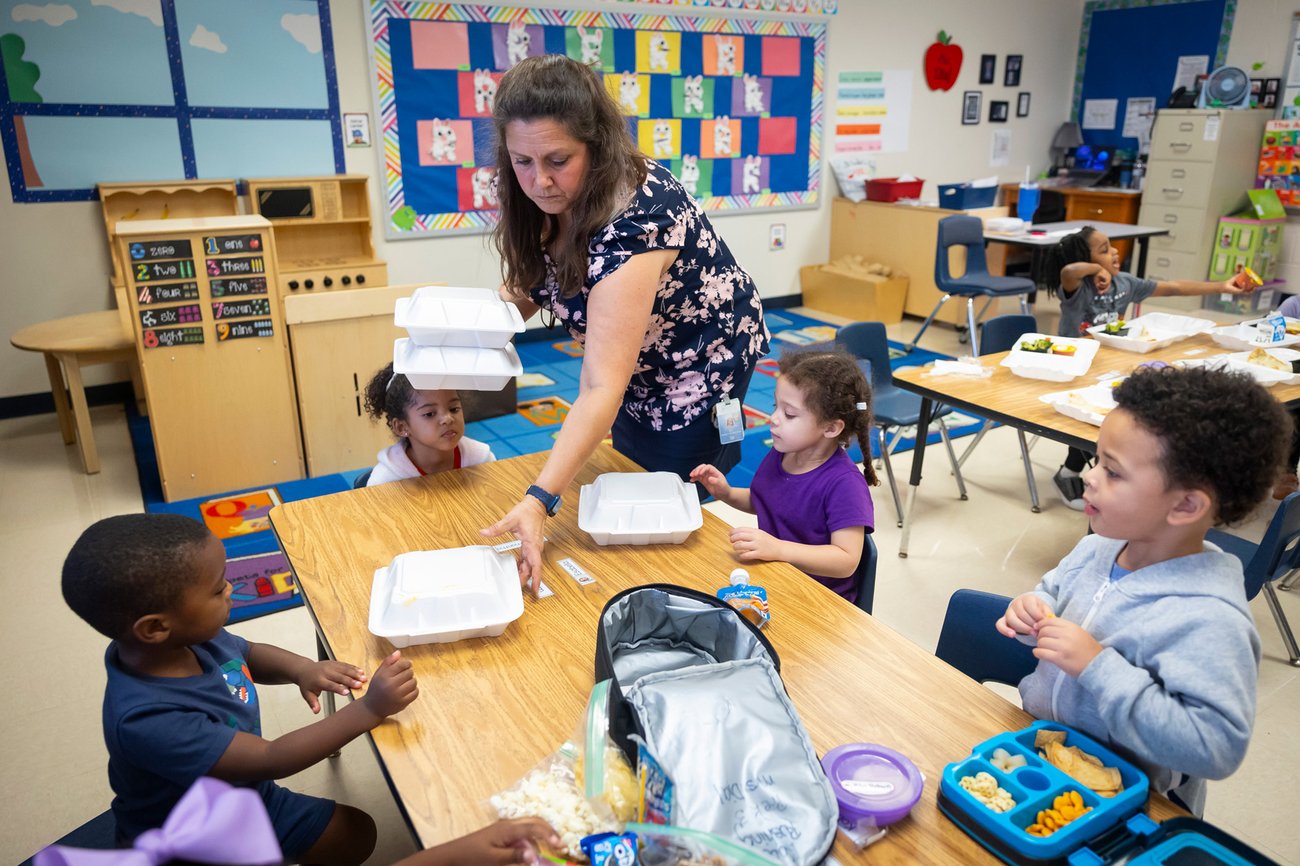
While Texas public school districts are required to provide full-day pre-K for many 4-year-olds, Spring ISD this year started a pre-K program for 3-year-olds, which isn’t mandated by the state. Spring officials believe the addition will give students an even earlier start.
We looked this week into the challenges Spring faces in expanding the program — issues that other Houston-area districts have also encountered with their own early education efforts.
In October, I visited Alief ISD’s early learning center built in 2022 next door to Horn Elementary.
The space is bright, state-of-the-art and half-empty. Part of the problem, district officials say, is getting word out to parents that the new building exists and is free to most Alief students.
In Aldine ISD, district leaders expanded their pre-K 3 program this school year from three campuses to 12, with the goal of helping parents curb commute times. But to accommodate the expansion, the district switched from full-day classes to half-days, presenting another potential obstacle for working parents.
For every district wanting to offer pre-K for 3-year-olds, funding is the biggest challenge. Texas only provides enough money to roughly cover the costs of half-day pre-K, with districts expected to scrape together enough money to pay for the rest of the day’s classes.
Research shows these efforts are often worth the investment.
Various studies have shown students who attend public pre-K are more likely to be ready for kindergarten, score higher on state reading and math tests, and are even slightly less likely to drop out of high school later in life. To best reap these benefits, though, quality teachers and curriculum matter, researchers have found.
So the next time you see a pre-K student, tip your cap to the little scholar. They could end up much smarter than you.
|